
Mouth Care Quiz
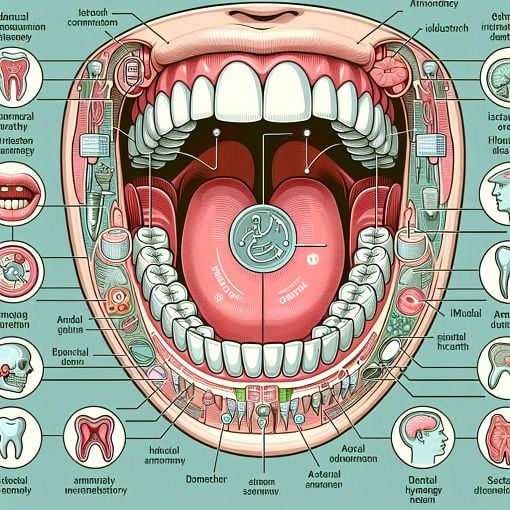
Mouth Care Awareness Quiz
Test your knowledge on oral health and mouth care with our engaging quiz! Learn about the importance of maintaining oral hygiene and how it affects overall health.
This quiz will cover:
- The impact of bacteria in your mouth
- Connection between oral health and heart disease
- Understanding gum disease and xerostomia
- Factors contributing to oral thrush
- Key areas to focus on for effective mouth care
How many bacteria can reside in your mouth?
10,000
900,000
Over 1 Billion
A single mouth can be home to more than 6 billion bacteria.
A single mouth can be home to more than 6 billion bacteria.
Studies have shown that gum disease (periodonitis) can increase your risk of developing heart disease. Additionally, poor dental health can increase your risk of developing a bacterial infection in the blood stream which can affect the heart valves. Studies have shown a link between tooth loss patterns and coronary artery disease.
Studies have shown that gum disease (periodonitis) can increase your risk of developing heart disease. Additionally, poor dental health can increase your risk of developing a bacterial infection in the blood stream which can affect the heart valves. Studies have shown a link between tooth loss patterns and coronary artery disease.
Poor oral care leads to gum disease in three out of every four adults. If left unnoticed and untreated, gum disease can be very painful, and eventually lead to teeth becoming loose and falling out. Think how horrible this must be!
No one should be at increased risk of gum disease due to poor mouth care during a hospital admission!! Keep a look out for red and inflammed gums to spot gum disease!
Poor oral care leads to gum disease in three out of every four adults. If left unnoticed and untreated, gum disease can be very painful, and eventually lead to teeth becoming loose and falling out. Think how horrible this must be!
No one should be at increased risk of gum disease due to poor mouth care during a hospital admission!! Keep a look out for red and inflammed gums to spot gum disease!
Xerostomia is the medical term for...?
Sore and inflammed gums from gum disease
Dry mouth resulting from reduced or absent saliva flow.
Oral Thrush
Saliva possesses many important functions including antimicrobial activity, mechanical cleansing action, control of pH, removal of food debris from the oral cavity, lubrication of the oral cavity, remineralization and maintaining the integrity of the oral mucosa
Xerostomia can have nutrition and dental implications, as well as psychological, health implications. Xerostomia may lead to gum disease, oral thrush, pain, discomfort, problems with eating, speaking, swallowing and wearing dentures.
What to do if you spot xerostomia: Encourage regular sips of water if possible, ask the doctors to review the patient's medication as some can cause a dry mouth, and ask for artificial saliva to be prescribed.
Saliva possesses many important functions including antimicrobial activity, mechanical cleansing action, control of pH, removal of food debris from the oral cavity, lubrication of the oral cavity, remineralization and maintaining the integrity of the oral mucosa
Xerostomia can have nutrition and dental implications, as well as psychological, health implications. Xerostomia may lead to gum disease, oral thrush, pain, discomfort, problems with eating, speaking, swallowing and wearing dentures.
What to do if you spot xerostomia: Encourage regular sips of water if possible, ask the doctors to review the patient's medication as some can cause a dry mouth, and ask for artificial saliva to be prescribed.
Select the 6 main areas of the mouth that should be considered when doing mouth care
Tongue
Lips
Throat
Dentures
Glottis
Vestibule
Teeth & Gums
Taste buds
Cheeks
Palate

What increases a patient's risk of developing oral thrush (select more than one)
Patients taking analgesia
Confused patients
Patients on antibiotics
Female patients
Patients who are NBM
Patients doing their own mouth care
Hospital food
Dysphagia
End of Life Care
Male patients
As mentioned before, your mouth contains billions of bacteria. Poor mouthcare can increase the risk of aspiration of these bacteria into the lung, leading to a chest infection and pneumonia.
As mentioned before, your mouth contains billions of bacteria. Poor mouthcare can increase the risk of aspiration of these bacteria into the lung, leading to a chest infection and pneumonia.
In 2012 the Medicines and Healthcare Regulations Agency advise not to use mouth sponges in patients who were likely to bite down and not to soak them before use.
Research show that oral foam swabs are not an effective means to remove dental plaque and should not be used as an alternative to tooth brushing (Pearson, 2002).
Foam swabs can however, be used to provide moisture to dry mouths or soak up salvia secretions.
In 2012 the Medicines and Healthcare Regulations Agency advise not to use mouth sponges in patients who were likely to bite down and not to soak them before use.
Research show that oral foam swabs are not an effective means to remove dental plaque and should not be used as an alternative to tooth brushing (Pearson, 2002).
Foam swabs can however, be used to provide moisture to dry mouths or soak up salvia secretions.
{"name":"Mouth Care Quiz", "url":"https://www.quiz-maker.com/QPREVIEW","txt":"Test your knowledge on oral health and mouth care with our engaging quiz! Learn about the importance of maintaining oral hygiene and how it affects overall health.This quiz will cover:The impact of bacteria in your mouthConnection between oral health and heart diseaseUnderstanding gum disease and xerostomiaFactors contributing to oral thrushKey areas to focus on for effective mouth care","img":"https://cdn.poll-maker.com/104-5106349/img-qwoxpglkboeycdgwnxc7rgbf.jpg"}